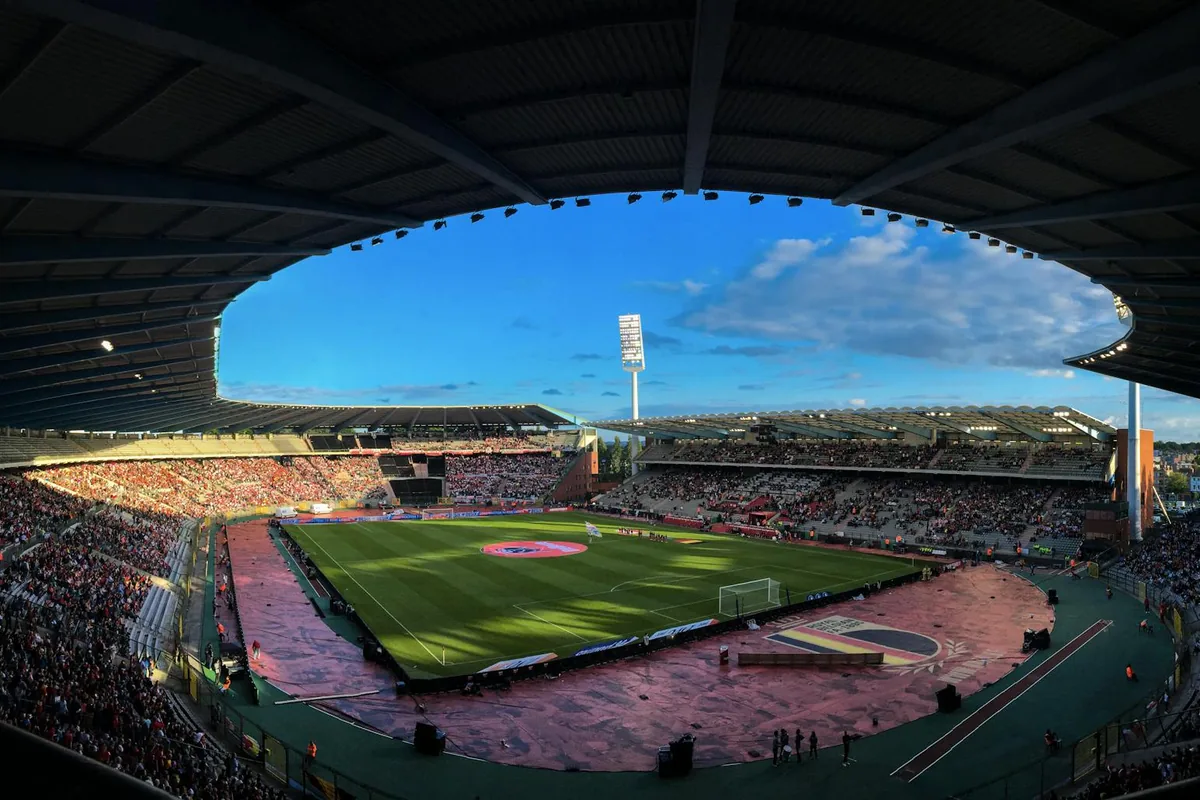
Arsenal Midfield Depth: 2025 Transfer Strategy
The Arsenal midfield has undergone a significant transformation, evolving into one of the most dynamic and tactically sophisticated units in the Premier League. The cornerstone of this evolution was the transformative signing of Declan Rice, whose impact has been profound. As the club looks toward the 2025 transfer windows, the focus shifts from foundational building to strategic refinement. The primary objective is no longer about finding starters but about enhancing depth, adding specific profiles, and ensuring the engine room can sustain a challenge on multiple fronts. This analysis outlines the key considerations, potential targets, and strategic philosophy behind Arsenal's midfield reinforcement plans for 2025.
Current Midfield Landscape: A Position of Strength
Mikel Arteta's system demands versatility, intelligence, and physical output from its midfielders. The current core is exceptionally strong. Declan Rice has established himself as the premier defensive pivot, offering unparalleled defensive coverage, progressive carrying, and leadership. Alongside him, Martin Ødegaard, the captain, orchestrates play with his creativity and pressing intelligence. The evolution of Kai Havertz into a potent advanced midfielder and the reliable presence of Thomas Partey, when fit, provide Arteta with high-quality options. Young talents like Fabio Vieira and Emile Smith Rowe offer different creative dimensions, while Mohamed Elneny provides experienced cover.
However, the demands of a potential 60+ game season, competing for the Premier League and deep into the Champions League, expose areas for strategic improvement. The dependency on Rice's durability is a risk, and the profile of a pure, deep-lying playmaker to alternate with or partner Rice remains a topic of discussion. Furthermore, the long-term future of players like Partey, given his contract situation and injury history, necessitates proactive planning. For a deeper look at the current squad construction, our Arsenal Squad Depth Analysis 2024-25 provides a comprehensive position-by-position breakdown.
Strategic Needs for 2025
Arsenal's transfer strategy, led by Edu Gaspar, is data-informed and profile-specific. For the midfield in 2025, several key needs emerge that will guide their search.
The "Six" and "Eight" Hybrid Profile
While Rice is immovable as the primary defensive midfielder, the ideal backup or alternative isn't merely a like-for-like replacement. Arsenal may seek a player who can operate as a traditional "six" but also has the capacity to play as a "number eight" in a double pivot. This player would need to be comfortable receiving under pressure, possess excellent passing range, and offer defensive solidity. This profile provides tactical flexibility, allowing Arteta to rotate Rice without drastically changing the team's structure or to deploy a different midfield balance against specific opponents. It’s a nuanced role that requires a high footballing IQ, much like the midfielders who defined Arsenal's The Invincibles era, where technical security and tactical discipline were paramount.
Progressive Passer and Press Resistance
One area where the squad can be enhanced is with a midfielder whose primary strength is breaking lines with incisive passing from deep. While Ødegaard creates from advanced areas and Rice progresses through carries, a player specializing in vertical, defense-splitting passes could unlock low-block defenses more consistently. This profile also requires supreme press resistance—the ability to receive in tight spaces and evade pressure to maintain possession and dictate tempo. This skill is crucial in European knockout games where midfield control is often the difference.
Long-Term Planning and Homegrown Quotas
Financial sustainability and squad registration rules are always a factor. Integrating a talented academy graduate can address depth needs while fulfilling homegrown player requirements. The success of Bukayo Saka is the blueprint, and the club will be assessing whether any Academy Prospects are ready to make the step up. Alternatively, targeting young, high-potential players who can develop under the current stars ensures continuity and protects long-term value, a strategy evident in the signings of players like Martin Ødegaard and William Saliba in their younger years.
Potential Transfer Targets and Market Approach
The 2025 market will present various options aligning with these strategic needs. Arsenal's recruitment will likely focus on players aged 21-26 who can contribute immediately while having resale value. Given the financial constraints of Profit and Sustainability Rules (PSR), the club may need to be creative, potentially involving player sales to fund major acquisitions.
For the hybrid "six/eight" role, names like Real Sociedad's Martín Zubimendi have been consistently linked. His composure, positioning, and passing accuracy fit the profile. Another could be Everton's Amadou Onana, who offers a more physical, box-to-box presence with defensive prowess. For the progressive passer profile, a player like Bayern Munich's Joshua Kimmich, should he become available, would be a transformative signing, though a costly one. A more attainable target might be a player like Feyenoord's Mats Wieffer, who has impressed with his distribution in the Eredivisie and Champions League.
The January 2025 window may be used for opportunistic deals or to address urgent injury crises, but the primary business is expected in the summer. As explored in our Arsenal January 2025 Transfer Strategy, the winter window is often about fine-tuning rather than major overhauls.
Integration with Arteta's Tactical Vision
Any new signing must seamlessly integrate into Mikel Arteta's complex tactical system. The manager demands intense pressing, positional discipline, and technical excellence. A new midfielder would need to master the team's Pressing Triggers and understand the intricate Build-Up Play patterns. Arteta has shown a willingness to adapt his system, as seen with the evolution of the inverted full-back role and the use of Kai Havertz. A new midfielder with a distinct skill set could prompt further tactical evolution, perhaps allowing for a more permanent shift to a 4-3-3 with a single pivot or a 3-2-2-3 in possession that further overloads central areas.
This focus on a cohesive football philosophy over individual stars is a thread that runs through the club's history, from the revolutionary tactics of Herbert Chapman to the Wengerball era. The modern iteration under Arteta and Edu continues this tradition of strategic team building.
Conclusion: Building a Dynasty's Engine Room
Arsenal's midfield strategy for 2025 is a sign of the club's elevated status. The conversation has moved from seeking saviors to adding calculated enhancements that push an already excellent unit toward becoming the undisputed best. The goal is to build a midfield with no drop-off in quality, capable of adapting to any tactical challenge or fixture congestion. Success in this endeavor will not only bolster the title challenge for 2025/26 but will solidify the foundation for sustained success, ensuring the heart of the team beats strongly for years to come. For ongoing analysis of the club's transfer moves, keep an eye on our dedicated Transfer News section, and for a broader view of the club's legacy, explore the complete Arsenal FC History Timeline.