
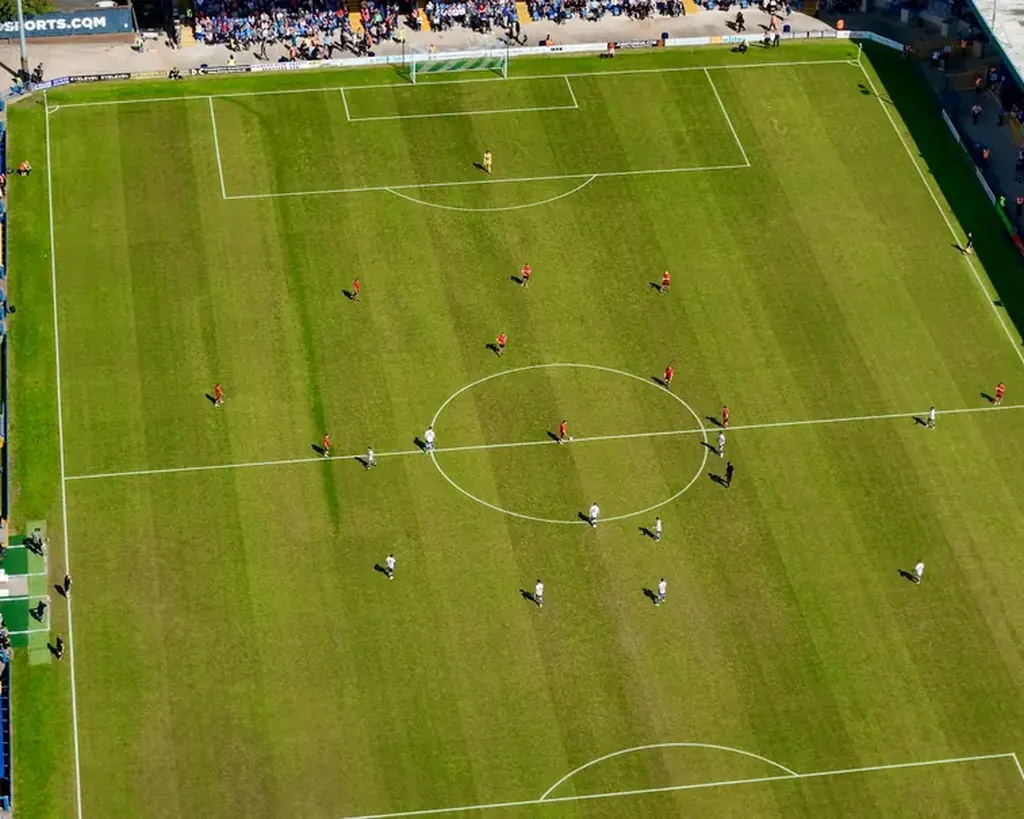
You're watching Arsenal, and suddenly the whole team shifts. Within seconds, they've swarmed an opponent, forced a mistake, and created a chance. This isn't random chaos—it's a coordinated pressing system with specific triggers. Let's break down when and how the Gunners actually hunt for the ball.
What Are Pressing Triggers?
Think of pressing triggers as the "go" signal. Arsenal doesn't press constantly—that would be exhausting and tactically naive. Instead, they wait for specific cues. When those cues appear, the entire team activates like a switch has been flipped.
The key triggers fall into four categories:
- Back-pass or poor touch: When an opponent plays a loose pass back to their goalkeeper or defender
- Receiving with back to goal: When an opposition player receives the ball facing their own goal
- Switch of play gone wrong: When a cross-field pass is underhit or misdirected
- Dribbling into a trap: When a player carries the ball into a pre-set pressing zone
The Trigger Recognition Checklist
Here's your practical guide to spotting Arsenal's pressing moments during a match:
1. Watch the Goalkeeper Distribution
When the opposition goalkeeper receives a back-pass and looks to play out:
- Arsenal's forwards immediately cut passing lanes to the full-backs
- The nearest midfielder presses the goalkeeper's short option
- If the goalkeeper hesitates, the press intensifies

2. Identify the "Trap Zone" in Midfield
Arsenal often invites the opposition into specific areas:
- The half-spaces between the centre-backs and full-backs
- Near the touchline, where sideline acts as an extra defender
- Central areas when Arsenal's midfield trio is numerically superior
3. Notice the Body Language Shift
Before the press starts, Arsenal players adjust:
- Shoulders drop, knees bend—they're loading for acceleration
- Eyes lock onto the ball carrier, not the ball itself
- The nearest player closes at an angle, not straight on
4. Track the "Trigger Player"
Arsenal's press is initiated by one designated player:
- Martinelli on the left wing (typically presses the right-back)
- Saka on the right wing (presses the left-back)
- Havertz or Jesus as the central forward (presses the centre-backs)
What to look for: Watch the winger on the ball side. When he accelerates toward the defender, the rest of the shape compresses.
When the Press Works (and When It Doesn't)
| Scenario | Arsenal's Success Rate | Key Factor |
|---|---|---|
| Opponent under pressure from crowd | High | Emotional momentum |
| Opponent playing out from a goal kick | Medium-High | Set pattern predictability |
| Midfield turnover after Arsenal attack | Medium | Transition chaos |
| Opponent with technical centre-backs | Low | Individual quality beats system |
| Late in match (70+ minutes) | Variable | Fatigue affects coordination |
The Full Sequence: How It Unfolds
- Trigger identified: A loose pass or poor touch in the opposition's half
- First man goes: The nearest Arsenal player commits at 80% speed—not full sprint, but enough to force a decision
- Covering angles: Other players close passing lanes, not just the ball carrier
- Compression: The entire team shifts toward the ball, shrinking space
- Win or reset: Either Arsenal wins the ball high, or the opponent escapes—if they do, Arsenal drops back into a mid-block
Common Mistakes to Watch For
- Over-committing: When two Arsenal players chase the same opponent, gaps appear elsewhere
- Losing shape: If the midfield line gets too high, a simple through ball can break the entire press
- Fatigue breaks: After 60 minutes, the coordination slips—players hesitate, and the press becomes disjointed
How to Use This as a Fan
Next time you watch Arsenal, don't just watch the ball. Watch the trigger player. See who initiates the run. Notice how the team compresses. You'll start spotting patterns that most casual viewers miss.
Want to test your knowledge? Try predicting when the press will start during a match. Look for that back-pass, that hesitation, that player receiving with his back to goal. When you see it, count how many seconds until Arsenal wins the ball back.
Arsenal's pressing system isn't about running endlessly—it's about intelligent triggers and coordinated responses. The best teams don't press more; they press smarter. And for Arsenal under Arteta, the smart press starts with recognizing the right moment.
Want to dive deeper into Arsenal's tactical setup? Check out our full tactics analysis hub for breakdowns of formations, build-up play, and defensive structures. Or join the conversation in our fan polls and predictions section. And if you're into rival comparisons, our Arsenal vs. top six analysis has you covered.
Reader Comments (0)