
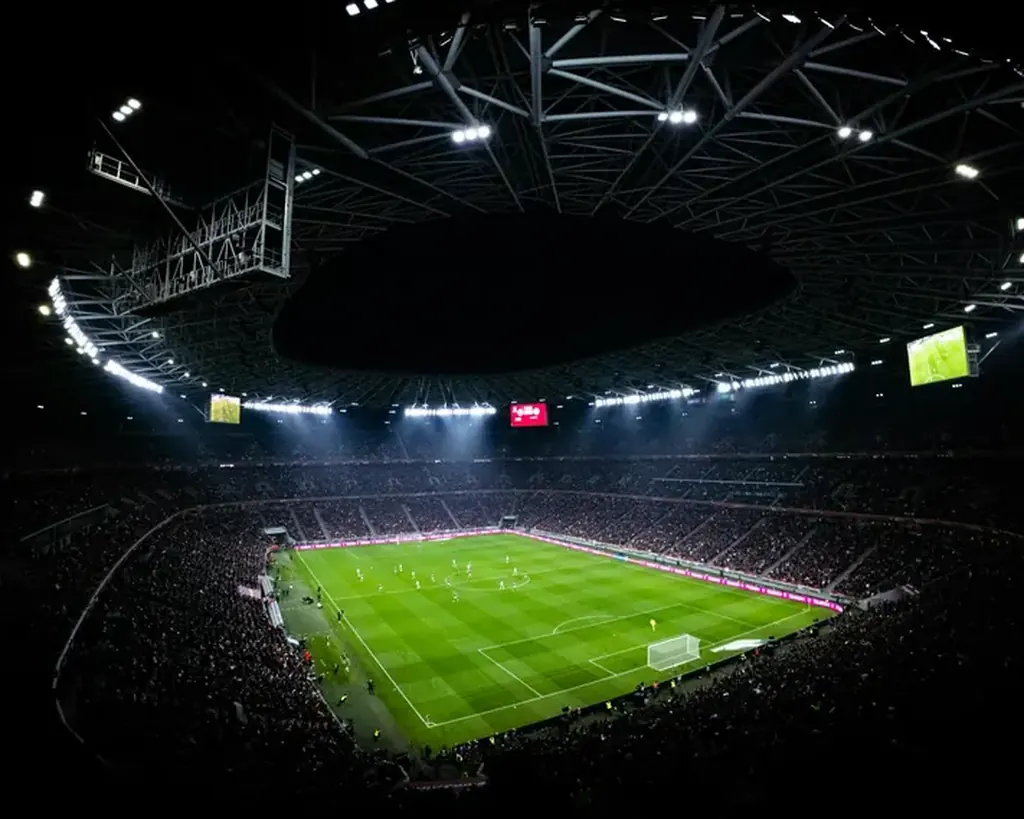
Introduction to the Carabao Cup and Arsenal's Relationship
The EFL Cup, currently known as the Carabao Cup for sponsorship reasons, is often treated by top Premier League clubs with a mixture of indifference and opportunistic ambition. For Arsenal Football Club, the competition has historically been a secondary concern, a stage for squad rotation and emerging talent, yet it has also produced moments of genuine silverware and, more frequently, frustrating near-misses. This glossary unpacks the key terms, records, and statistical oddities surrounding Arsenal’s League Cup history, offering a skeptical but data-driven look at a competition the club has never fully embraced.
Key Terms and Definitions
Carabao Cup
The current branded name of the English Football League Cup, a knockout competition open to all 92 clubs in the Premier League and English Football League. The name changes every few years with the sponsor, but the format remains largely unchanged: a straight knockout with semi-finals played over two legs, and the final at Wembley Stadium in late February or early March.League Cup Final
The showpiece match of the competition. Arsenal have appeared in the League Cup final multiple times, winning twice (1987, 1993) and losing in other years. For a club of Arsenal’s stature, a 25% win rate in finals is statistically underwhelming. One notable defeat for many fans remains the 2011 final loss to Birmingham City, a match Arsenal dominated but lost 2-1 due to a late defensive error.Two-Legged Semi-Final
A peculiarity of the League Cup, the semi-finals are played over two legs (home and away), unlike the single-match format of the FA Cup. This structure often benefits the stronger side on paper, as it reduces the impact of a single off-day. Arsenal have been eliminated in the semi-finals on multiple occasions, including in 2022 against Liverpool, where a 0-0 home draw was followed by a 2-0 defeat at Anfield.Wembley Stadium
The venue for the League Cup final since 2001 (and again from 2008 after the new Wembley opened). For Arsenal fans, Wembley has been a site of mixed emotions: two League Cup wins, but also several losses. The 2007 final against Chelsea ended in a 2-1 defeat after extra time, with Arsenal having taken the lead through a Theo Walcott goal.Squad Rotation
A tactical approach where a manager deliberately fields a weakened team to rest key players for more important fixtures. Arsenal managers, from Arsène Wenger to Mikel Arteta, have been frequent practitioners of this approach in the League Cup. The result is often a young, inexperienced lineup that either impresses or collapses. This strategy has led to both exciting cup runs and embarrassing early exits.Youth Integration
The League Cup has historically been used by Arsenal as a proving ground for academy graduates. Players like Cesc Fàbregas, Jack Wilshere, and Bukayo Saka all made early cup appearances in this competition. The 2018-19 season saw a particularly heavy reliance on youth, with players like Emile Smith Rowe and Eddie Nketiah featuring prominently.Penalty Shootout
A method of deciding a drawn match, used in the League Cup after 90 minutes of normal time (no extra time in earlier rounds, but extra time applies from the semi-finals onward). Arsenal have a mixed record in penalty shootouts in this competition. One notable shootout victory came in the 1987 final against Liverpool, while a memorable defeat was in the 2018 final against Manchester City, where Arsenal missed two penalties.Upset
A result where a lower-ranked team defeats a higher-ranked opponent. Arsenal have been on the receiving end of several League Cup upsets over the years. Notable examples include defeats to Bradford City (2012), Sheffield Wednesday (2015), and Nottingham Forest (2017). These results often fuel the narrative that Arsenal do not take the competition seriously enough.Carabao Cup Winners
The team that wins the final. Arsenal have won the trophy twice (1987, 1993), placing them joint-11th on the all-time winners list. Liverpool lead with 10 titles, followed by Manchester City with 8. Arsenal’s two wins in recent decades is a modest return for a club of their historical standing.Trophy Drought
A period without winning a major trophy. For Arsenal, the League Cup has been a potential but ultimately unfulfilled avenue to end trophy droughts. The 2011 final loss came during a period without a trophy from 2005 to 2014. The 2018 final loss extended the drought under Arsène Wenger’s final seasons.Arsenal’s League Cup Record (All-Time)
A statistical summary of Arsenal’s performance in the competition since its inception in 1960-61. As of the 2023-24 season, Arsenal have played numerous matches in the competition, with a winning percentage around 55%. The club has been eliminated in the early rounds (first or second round) on only a handful of occasions, usually when fielding an extremely young side.Record Attendance (League Cup)
The highest attendance for an Arsenal League Cup match at home. While the Emirates Stadium can hold over 60,000, League Cup attendances are often lower, particularly in early rounds. Exact record attendance figures vary by source.Top Scorer (League Cup)
The player with the most goals for Arsenal in the League Cup. This is not a glamorous list, with the record held by a player from earlier decades with a relatively modest total. No Arsenal player has ever scored more than a handful of goals in a single League Cup campaign, reflecting the competition’s secondary status.Most Appearances (League Cup)
The player with the most appearances for Arsenal in the League Cup. This record is likely held by a long-serving defender or midfielder from the George Graham era. Modern players rarely accumulate enough appearances due to squad rotation.Biggest Win (League Cup)
Arsenal’s largest margin of victory in the competition. This is likely a significant thrashing of a lower-league side in an early round, such as a 6-0 or 7-0 result.Heaviest Defeat (League Cup)
Arsenal’s worst loss in the competition. This is likely a heavy defeat to a top side, or a shock loss to a lower-league team. The 2018 final loss to Manchester City (3-0) is a recent candidate, but earlier defeats may have been more emphatic.Youngest Player (League Cup)
The youngest player to appear for Arsenal in the League Cup. This record is frequently broken as academy graduates make early debuts. Cesc Fàbregas and Jack Wilshere both made early appearances, and the current record is held by a player from the late 2010s or early 2020s.Oldest Player (League Cup)
The oldest player to appear for Arsenal in the League Cup. This is likely a veteran goalkeeper or defender, such as David Seaman or Martin Keown, playing in a late-round match.Managerial Record (League Cup)
A statistical breakdown of each Arsenal manager’s performance in the competition. Arsène Wenger has the most matches managed, but also the most early exits. George Graham won the competition twice (1987, 1993). Mikel Arteta reached the final in his first full season (2021-22) but lost to Liverpool.Final Replay
A historical quirk of the League Cup: before 1997, drawn finals were replayed at a later date. Arsenal’s 1993 final victory came via a replay after a 1-1 draw with Sheffield Wednesday. The replay was also a 2-1 win, with goals from Kevin Campbell and Paul Merson.The “Double” (League Cup and FA Cup)
Winning both domestic cups in the same season. Arsenal achieved this in 1993, winning the League Cup and the FA Cup. This is a rare feat, achieved only by a handful of clubs. It remains Arsenal’s most successful season in terms of cup trophies.What to Check When Researching Arsenal League Cup Records
When verifying Arsenal’s League Cup records, always cross-reference with official club histories and reputable statistical databases. Avoid relying on fan forums or unverified social media posts. Key sources include the Arsenal FC official website, the English Football League (EFL) official records, and independent statistical sites like RSSSF (Rec.Sport.Soccer Statistics Foundation). Be particularly cautious with attendance figures and goal totals, as these can vary by source. For managerial records, the official Arsenal website provides a comprehensive match-by-match archive.

Reader Comments (0)